
Basketball Journal
The role of the bench during a demanding stretch of games
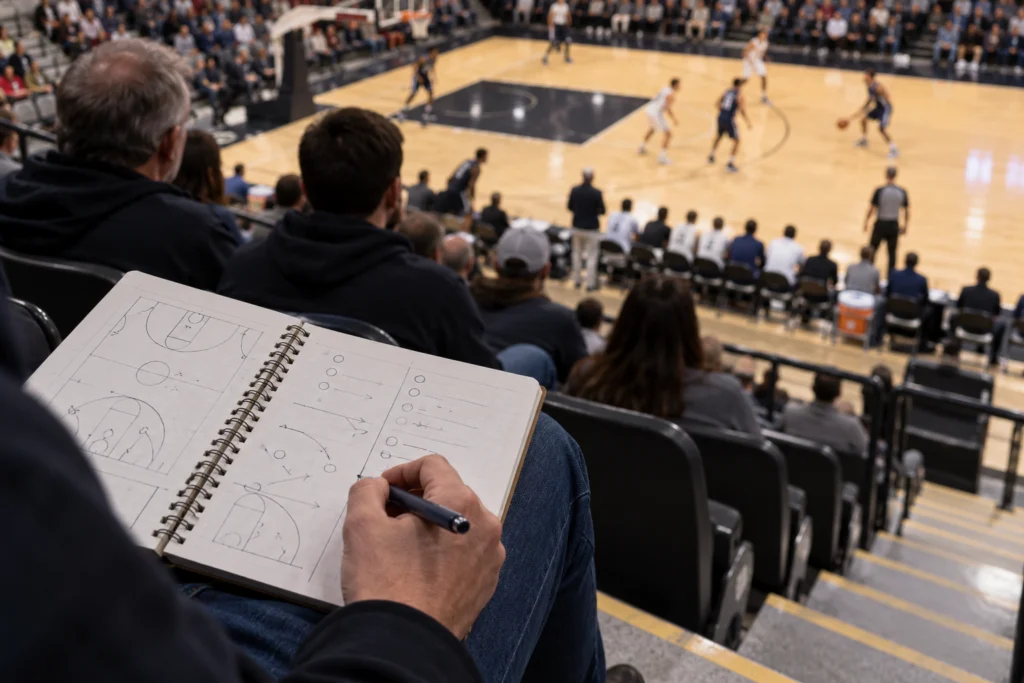
A bench unit does more than supply points while starters sit. Reserve players may maintain a particular role, change the matchup or share minutes with a starter. Evaluate the combinations used rather than imagining the bench as one fixed second team.
Ask which job each player is doing
Watch who organises possessions, supplies spacing and handles particular defensive tasks. A reserve can be useful without taking many shots. The relevant question is whether the assigned role helps the group function.
Check which teammates and opponents share the minutes. A player used beside a primary creator faces a different task from one asked to initiate the offence. Do not compare their point totals as if opportunities were identical.
| Area | Watch | Do not assume |
|---|---|---|
| Role | What task is being supplied? | Low scoring means no contribution |
| Combination | Who shares the floor? | Every reserve plays in the same unit |
| Opportunity | Minutes and possession involvement | Raw totals are equal tests |
| Context | Opponent and schedule | One stretch proves a permanent level |
Use schedule as context, not an excuse for every result
A demanding stretch can prompt different rotation decisions, but a calendar alone does not establish why a player struggled. Check official availability and the actual minutes. Avoid diagnosing fatigue or injury from a poor shooting night.
NBA plus-minus describes point differential while a player or team is on the floor. It can guide a review, but a short reserve stint may be strongly influenced by teammates, opponents and shooting variation.
- Track roles as well as points.
- Record lineup partners and minutes.
- Use official availability information where relevant.
- Review several comparable stretches before a broad verdict.
Look for a repeatable effect
Perhaps the group gets into its offence more clearly, protects a defensive matchup or struggles to create space. Describe the repeated action and check it against video. A vague claim that the bench “wanted it more” needs more than the score.
Keep development and immediate results separate. A coach may be exploring a role, but do not assert that intention without evidence. State what was observed and what remains an interpretation.
Pick one reserve stint and make a brief role note: who brought the ball into the offence, who occupied space away from it and which opponent group was present. Include an observable contribution that did not produce points, if there was one. When the next stint begins, check whether the partners and task changed. This provides a better comparison than adding every reserve’s scoring into one undifferentiated total.
Questions and answers
Are bench points enough to judge reserves?
No. Roles, opportunities and combinations matter.
Does one negative plus-minus prove poor play?
No. The sample and shared minutes need context.
Can a busy schedule explain every bad game?
No. It is one context variable, not a complete causal explanation.
Sources: nba.com; official.nba.com.