Basketball Journal
Following the Raptors through a season: A practical viewing journal
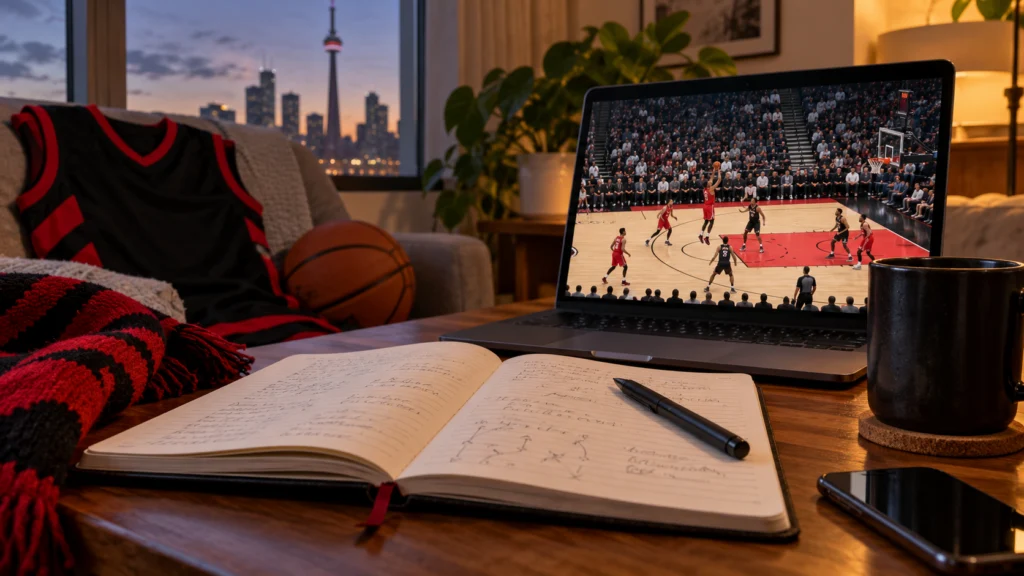
A season journal can make following the Raptors more rewarding without turning every game into a spreadsheet project. Choose a few questions and record enough context to revisit them. The aim is to notice patterns, not produce a confident verdict after every night.
Choose a focus for a short stretch
You might follow how lineups create space, how possessions begin or how the team responds to a particular type of opponent. Keep the question narrow enough to observe. A vague demand to explain the entire season makes notes repetitive.
Record the game date, opponent and the source of any factual update. Do not rely on memory for who was available or what a report said. Verify current roster and injury information through official sources when it matters.
| Field | Write | Purpose |
|---|---|---|
| Question | One thing to watch | Keeps attention focused |
| Observation | A specific repeated action or sequence | Supports an explanation |
| Data | A defined measure with filters | Allows a comparable check |
| Uncertainty | What you could not establish | Prevents overconfidence |
Keep the statistical comparison consistent
Use the same season, date range and game type when comparing a stretch. Raw totals and per-game or possession-based figures are not interchangeable. The NBA glossary is a useful reference for definitions.
Separate a player’s role from reputation. If a lineup changes, note the verified context instead of attributing every difference to motivation or chemistry. Those explanations need evidence too.
- Choose one focus for several games.
- Save dates and official source references.
- Use consistent statistical filters.
- Review patterns after a stretch rather than only the latest result.
Make the journal sustainable
A few sentences and one small table may be enough. Do not force a lesson from a game you only partly watched. Mark that limitation and avoid pretending highlights provide the same view as a full game.
At the end of a month, keep the questions that produced useful observations and drop those that did not. The journal should support enjoyment and clearer discussion, not become another obligation.
Try a fictional journal entry with separate lines for “observed” and “to check”. You might observe that a group repeatedly began possessions with the same action, while leaving the reason for that choice unresolved. Add the relevant game time so you can find the sequence again. At the next review, retain the observation even if your explanation changes; otherwise the journal becomes a collection of opinions that cannot be checked.
Questions and answers
Should every game receive a detailed report?
No. A short accurate note is better than a long repetitive entry.
Can highlights explain every rotation choice?
Not reliably. They omit much of the sequence and context. State what you actually watched.
Should current injuries be written from memory?
No. Use a dated official source and distinguish confirmed information from interpretation.
Sources: nba.com; official.nba.com.